2 dives in cenote Dos ojos

Diving Cenote Dos Ojos

Dive 2 caverns in Cenote Dos ojos,

The perfect introduction for a first cenote diving exprience

Beautiful & easy cavern dive site ideal to introduce certified divers to cavern cenotes

Map cenote Dos ojos
Map cenote Dos ojos

Dos Ojos (Two Eyes) refers to two neighboring cenotes that are connected by a large cavern that also connects to a subterranean river. Dos Ojos was filmed for IMAX in 2002 and for BBC/Discovery in 2006.

Dos Ojos is an excellent place to do the first cenote dive due its wide spaces, crystal clear waters and heavy sediment, which is not as easily disturbed. This cenote dive site consists of two independent circuits: The first dive starts at the Barbie Line, a 415 meters line with wide spaces and large light galleries. We always start the dive with this line because it is very close to the surface and is a great way to become acquainted with the feeling of the fresh water, in which buoyancy changes are faster and more delicate. The duration of this dive is 45 minutes and the maximum depth is 6 meters. The second dive circuit is called the Bat Cave, a very different experience. The Bat Cave is an adjacent cenote, next to Dos Ojos, and represents a much more preserved environment, mainly due the fact that the roof of the cenote hasn’t collapsed yet and all of the formations around it are in very good shape. The dive circuit has a length of about 300 meters with a maximum depth of 10 meters. It is darker and takes about 35 minutes.

1 dive in Casa cenote + 1 dive in cenote Carwash

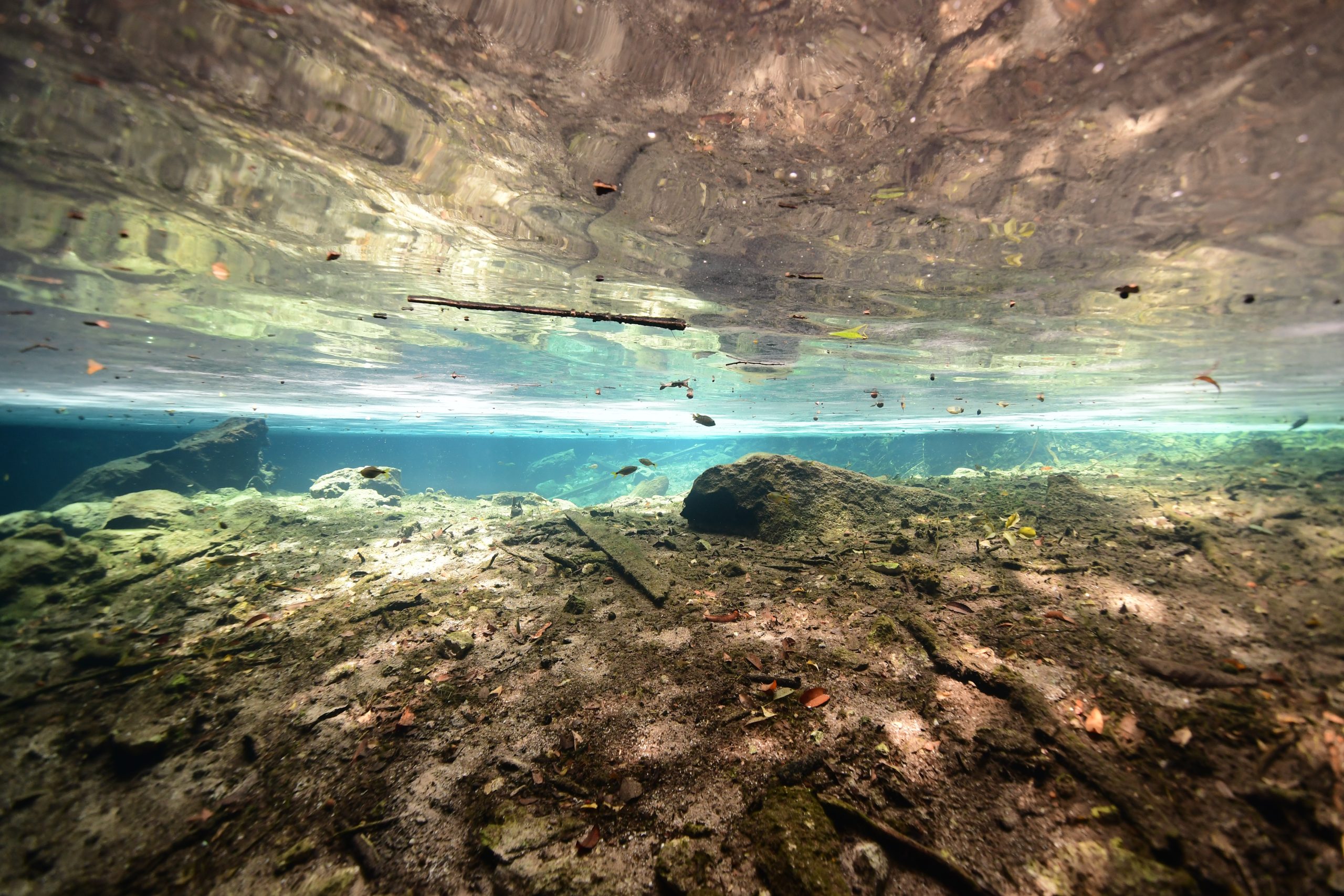
Gazing the green window of cenote carwash

1 dive in Casa cenote + 1 dive in cenote Carwash. An ideal tour to get your diving skills after a while before experiencing a proper cavern dive. Two different expresions of cenotes in braskish a fresh water

1 dive in Casa Cenote,

the last step for the water running from the jungle to the sea.

Casa Cenote, is one of the most popular cenotes that connects one of the longest underwater cave systems in the world with the ocean, only a few steps from the beach!

Casa Cenote extends for about 250 yards into the jungle, leading to a dead end. The water level in the pools varies, but it is no more than 8 meters in the deepest part.

The dive follows alongside the jungle, and it is surrounded by lush algae covered Mangrove roots reaching into the water. Huge rocks overgrown with mosses and green algae decorate the bottom.

You will be enthralled by the clarity, light and color of it.  The mangrove roots are underwater nurseries home of thousands of newly hatched fish. Many fresh and saltwater species in the cenote, such as platys, guppies and mollies.  The incredibly clear and pure water, as well as the play of light, are a delight for photographers.

Diving Casa Cenote gives a unique feeling of swimming underneath the jungle, dazzling him with the beauty of the flora and fauna. Do not miss the chance to live the experience and keep the memory!

1 dive Cenote Carwash,

The underwater garden gate to a huge cave,

Car Wash (or Aktun Ha, meaning water cave in Mayan) was one of the first cenotes that cave divers explored. The name originated from taxi drivers who used to go to this cenote to wash their cars.

The open water part of this cenote is like a small lagoon. It has a beautiful underwater garden that houses fish, turtles, and even a small crocodile. The cavern dive we operate here starts in the garden area and then proceeds into the cavern. The speleothems in this cavern are black, stained by the tannic acid that once passed through this system. The cavern is large, and the most beautiful part of the dive is perhaps the view of the light when moving back out into the garden from the cavern. Fallen trees can be seen silhouetted against the bright entrance. To finish, we do the safety stop while looking around the garden and at its various inhabitants.

This is an easy cavern dive, and the cavern spaces are very large. The way in seems dark, but the sunlight is always visible. There is a thin sediment at the bottom of the cavern, but since the cavern is very large, there is no need to swim near the sediment.


Dive The Pit & Dos ojos cenotes

1 dive in cenote The pit & 1 or 2 dives in cenote Dos ojos. A tour dedicated to advanced certificate divers who want to experience the incredible wide spaces  and explore the formations in caverns. Both dive  located in the same cenote park.

1 dive in cenote The Pit

The biggest-deepest underwater cavern in Tulum

The Pit is one of the deepest cenotes in the state of Quintana Roo, its a spectacular dive site in a huge chamber. Exceptional water clarity with a visibility of more than 100 meters. Features strong light beams that during the summer penetrate the cavern for more than 27 meters. At this depth, there is a thick hydrogen sulfide cloud. Additionally, small and large stalactites are visible.

Scuba diving in The Pit requires previous deep scuba diving and cavern scuba diving experience.

1 or 2 dives in cenote Dos ojos

The most famous cavern in Tulum

Dos Ojos (Two Eyes) refers to two neighboring cenotes that are connected by a large cavern that also connects to a subterranean river. Dos Ojos was filmed for IMAX in 2002 and for BBC/Discovery in 2006.

Dos Ojos is an excellent place to do the first cenote dive due its wide spaces, crystal clear waters and heavy sediment, which is not as easily disturbed. This cenote dive site consists of two independent circuits: The first dive starts at the Barbie Line, a 415 meters line with wide spaces and large light galleries. We always start the dive with this line because it is very close to the surface and is a great way to become acquainted with the feeling of the fresh water, in which buoyancy changes are faster and more delicate. The duration of this dive is 45 minutes and the maximum depth is 6 meters. The second dive circuit is called the Bat Cave, a very different experience. The Bat Cave is an adjacent cenote, next to Dos Ojos, and represents a much more preserved environment, mainly due the fact that the roof of the cenote hasn’t collapsed yet and all of the formations around it are in very good shape. The dive circuit has a length of about 300 meters with a maximum depth of 10 meters. It is darker and takes about 35 minutes.
 

1 dive cenote Tajma-ha +1 dive cenote Chikin-ha

Cenote Diving, Tulum, Taj Mahal

Dive cenote Tajma-ha and Chikin ha

This diving tour is dedicated to certified divers that have dove in cenotes before and seek a combination of many beautiful features that cenote offer in one like halloclines, tree roots, amazing light entrances and very interesting swim throughs.

1 dive in Cenote Tajma Ha, return to the soul

1 dive site

Difficulty: Moderate  previous cenote experience required

Maximum depth: 17 meters

Features: cave formations, bat cave, halocline, light beams

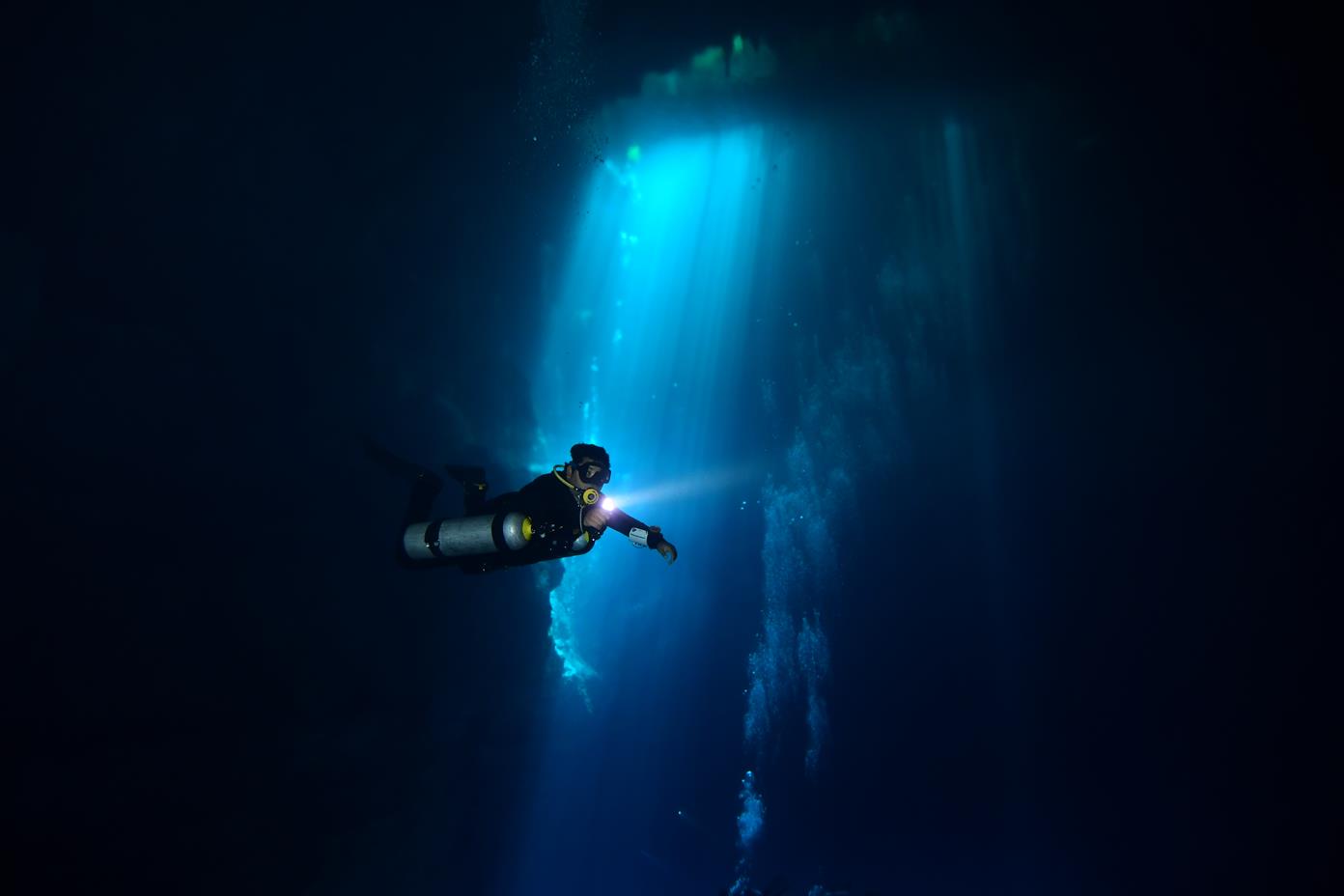
Tajma Ha is an impressive and well-rounded dive site featuring both very dark passages and bright chambers that are penetrated by sunlight. It contains almost all of what a cenote could have: formations, halocline, light beams and different cenotes to surface into. Fossils and logs decorate the site, and a halocline is present at some of the greater depths. The cenote features many beautiful views as one comes out of the darkness into the bright, open chambers, which shine in blues and greens.

The dive rises and falls in depth quite often, which makes it slightly more challenging than some of the other cenotes. Previous cavern diving experience is required. The circuit is approximately 130 m in length. The maximum depth is 17 m with a dive time of about 40 minutes.

map cenote Tajma-ha
map cenote Tajma-ha

Cenote Chikin Ha, a dive site with amazing light beams

dive site with a few path options

Difficulty: Easy 

Maximum depth: 16 meters

Features: halocline, tree roots, light beams

Chikin Ha is a beautiful cenote both inside and out. An expansive entrance sets a pretty scene for divers preparing to enter the cenote. Snorkelers and divers both enjoy this open area. Light beams can be seen, as well as a halocline deeper within the cenote. Plant and tree roots are passed in many areas, adding to this cenote’s mystique. Snorkelers can enjoy the clarity of the water and large open space for swimming; however, there are almost no formations in this cavern.

The entire dive circuit is about 160 m long with a maximum depth of 16 m. The dive lasts about 40 minutes. Previous cavern diving experience is required. A few different paths can be taken through the cenote.

Map cenote Chikin-ha

2 dives in cenote Dreamgate

2 Dives in cenote dreamgate.

Cenote Dreamgate is the cavern with the most rock formations in Tulum

Difficulty: moderate to difficult

Maximum depth: 5 meters

Features: beautiful cave formations

Dream Gate is a cenote and large cavern that it is part of Sac Aktun underwater cave system (like Gran Cenote and Casa Cenote). It is located about 10 km north of Tulum. Dream Gate has some of the nicest speleothemes (cave formations): the cavern is completely full of stalactites, columns, and stalagmites.

There are two independent dive circuits in this cavern: The upstream line and the downstream line. The upstream line is the most elaborately decorated, and at the furthest point of the dive there is an air pocket with a fully decorated ceiling where we come to the surface. When heading back to the entrance, the light streaming into the cenote silhouettes the stalactites for a breathtaking view. This dive takes about 35 minutes and the maximum depth is 5 m (15 ft). The downstream line is quite different; it is also fully decorated and connects with another cenote. Many tree roots from the jungle penetrate the cave to absorb water. At the furthest point of the circuit, light from the other cenote can be seen. The dive time and depth are similar to those of the upstream dive: 35 min and 5 m (15 ft).

Diving in this cavern is recommended for people who were comfortable in the beginner caverns because it is small, fragile, and dark in some places.

1 dive cenote Angelita + 1 dive cenote Carwash

Dive cenote Angelita + Carwash. A tour for the adventurous spirit. This tour is dedicated for advanced divers that have already done cenote dives before.  Featuring deep dive in  underwater clouds produced by a cemetery of trees in cenote Angelita and  verdant gardens with deep cavern passages in Carwash.

Cenote Angelita, the dive site in the clouds

Difficulty: advanced

Maximum depth: 40 meters

Features: hydrogen sulfide cloud, small cave

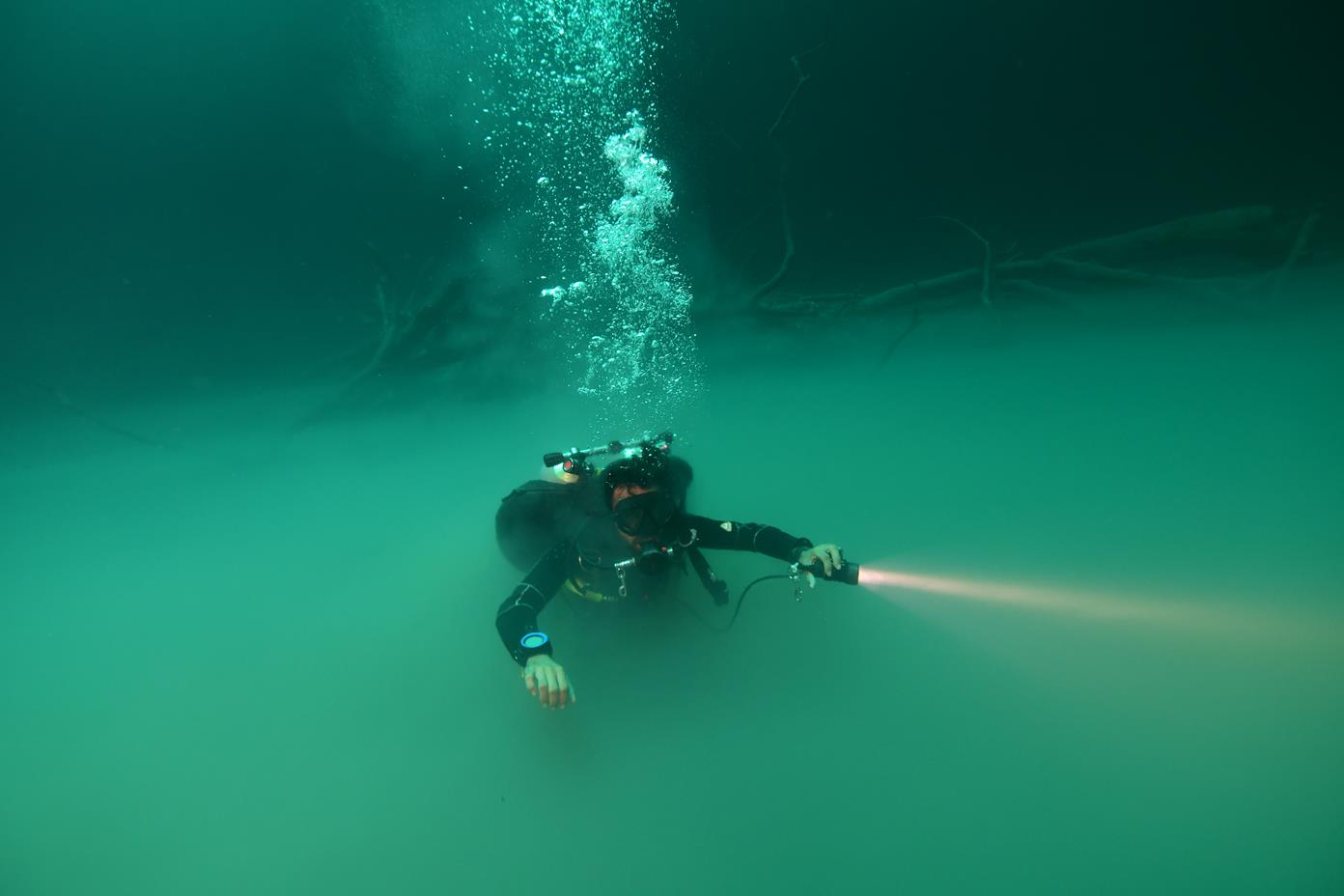
Angelita is a magical cenote that is often described as mysterious and a bit spooky. At first, the cenote appears to be unassuming, just a small pond in the middle of a very thick jungle. However, the deepest parts of the cenote go down to 204 ft (66 m). Its most amazing feature is a 4.5 ft (1.5 m) thick hydrogen sulfide cloud that starts at 83 ft (27 m). This cloud is made up of gases that have leaked out of decomposing trees and leaves that fall from the jungle into the cenote. This gas accumulates where the fresh and the salt water meet (the halocline). This creates a false floor at the bottom, which can be traversed to reach a dark, otherworldly chamber that is full of jungle detritus. The base of this mountain of detritus starts below but reaches above the cloud. Rising again from below the cloud, the peak of the mountain of detritus takes on a new face, as if one is ascending a cloud-topped mountain. On the way out of the cenote, there is a small cave loop, and at the surface, one can get an appreciation for all of the trees that provide this cenote with its hydrogen sulfide cloud. The dive lasts about half an hour. It requires experience in deep diving and cavern diving.


Cenote Carwash, the gate of cave diving

1 tank

Difficulty: easy

Maximum depth:

Features: black cave formations, lily pad garden

Car Wash (or Aktun Ha, meaning water cave in Mayan) was one of the first cenotes that cave divers explored. The name originated from taxi drivers who used to go to this cenote to wash their cars.

The open water part of this cenote is like a small lagoon. It has a beautiful underwater garden that houses fish, turtles, and even a small crocodile. The cavern dive we operate here starts in the garden area and then proceeds into the cavern. The speleothemes in this cavern are black, stained by the tannic acid that once passed trough this system. The cavern is large, and the most beautiful part of the dive is perhaps the view of the light when moving back out into the garden from the cavern. Fallen trees can be seen silhouetted against the bright entrance. To finish, we do the safety stop while looking around the garden and at its various inhabitants.

This is an easy cavern dive, and the cavern spaces are very large. The way in seems dark, but the sunlight is always visible. There is a thin sediment at the bottom of the cavern, but since the cavern is very large, there is no need to swim near the sediment. Diving in one of the beginner caverns (like Dos Ojos and Gran Cenote) is recommended before visiting Car Wash, but this cenote does not require special skills.

1 dive cenote Nicte-ha + 1 dive cenote Carwash

1 dive in cenote Nicte-ha + 1 dive in cenote Carwash, this is a great tour for divers with previous cenote diving experience. You will find incredible contrasts of light and life hiding under the cavern surrounding these two spectacular cenotes

1 dive in cenote Nicte-ha,

Lushed garden with crystal clear water emerging form the dephts of white caverns

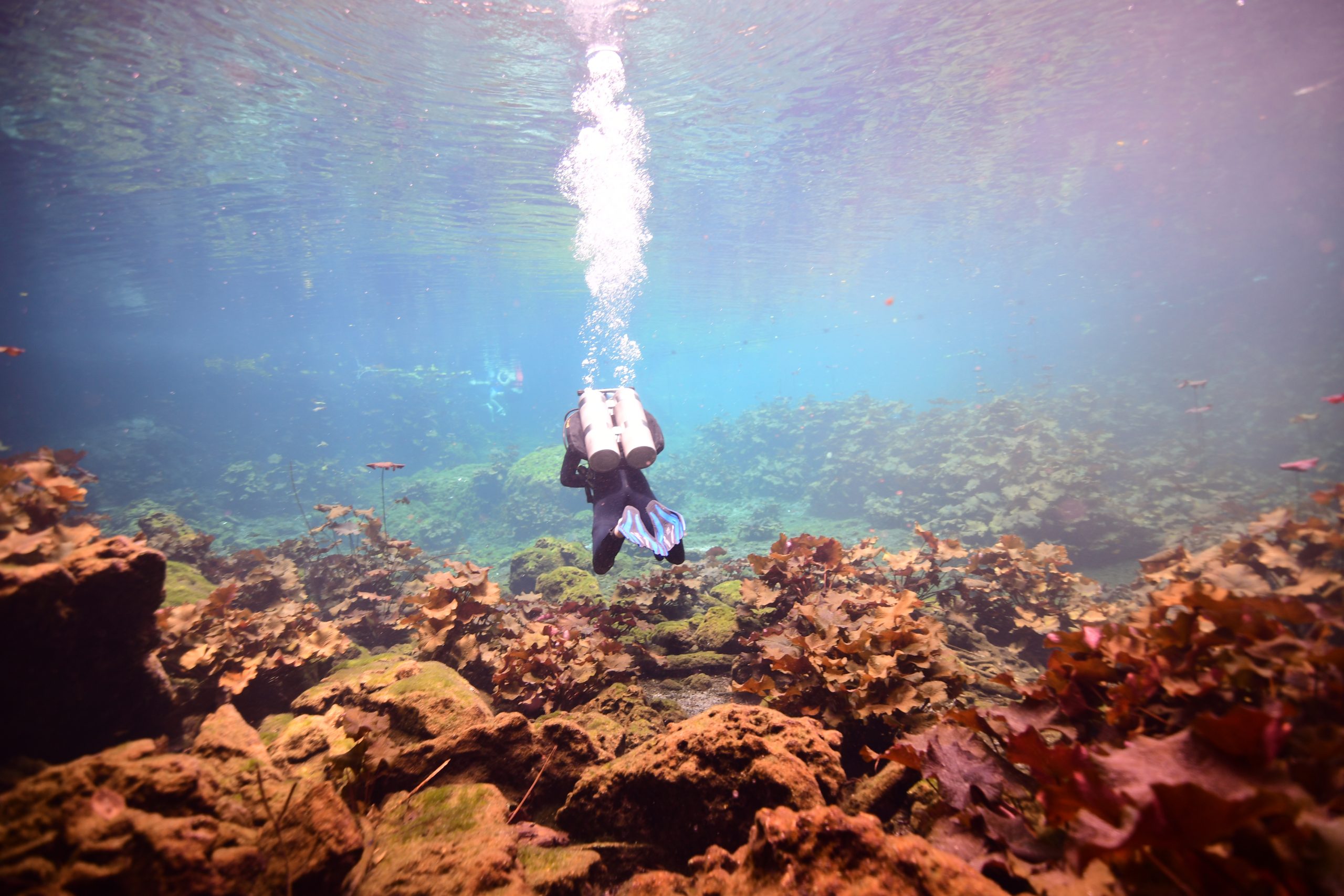
The meaning of its name in mayan is water flower since it is fulfilled with lilies plant and flowers. This cenote has a shallow garden floating in crystal clear water surrounded by lushed mayan jungle. Diving here gives exceptional sight of light shining through its paradisiac vegetation under and above the water.

1 dive Cenote Carwash,

The underwater garden gate to a huge cave,

Car Wash (or Aktun Ha, meaning water cave in Mayan) was one of the first cenotes that cave divers explored. The name originated from taxi drivers who used to go to this cenote to wash their cars.

The open water part of this cenote is like a small lagoon. It has a beautiful underwater garden that houses fish, turtles, and even a small crocodile. The cavern dive we operate here starts in the garden area and then proceeds into the cavern. The speleothems in this cavern are black, stained by the tannic acid that once passed through this system. The cavern is large, and the most beautiful part of the dive is perhaps the view of the light when moving back out into the garden from the cavern. Fallen trees can be seen silhouetted against the bright entrance. To finish, we do the safety stop while looking around the garden and at its various inhabitants.

This is an easy cavern dive, and the cavern spaces are very large. The way in seems dark, but the sunlight is always visible. There is a thin sediment at the bottom of the cavern, but since the cavern is very large, there is no need to swim near the sediment.